Field report: Ruby Community Conference, Krakow 2026
Last year after Friendly.rb I decided that one of the treats I'll sprinkle throughout 2026 will be visiting a Ruby conference somewhere in Europe at least once per quarter. In the pre-COVID times I used to do this often, but life and growth at my company has kept me at home for several years.
And what a treat it is indeed – catching up with old friends, meeting new ones and all while learning new tricks from the best open source community. As an added bonus this year in Krakow I got to spend quality time with Genadi, my partner in crime at Balkan Ruby.
We open this year with The Ruby Community Conference or RuCoCo for short.
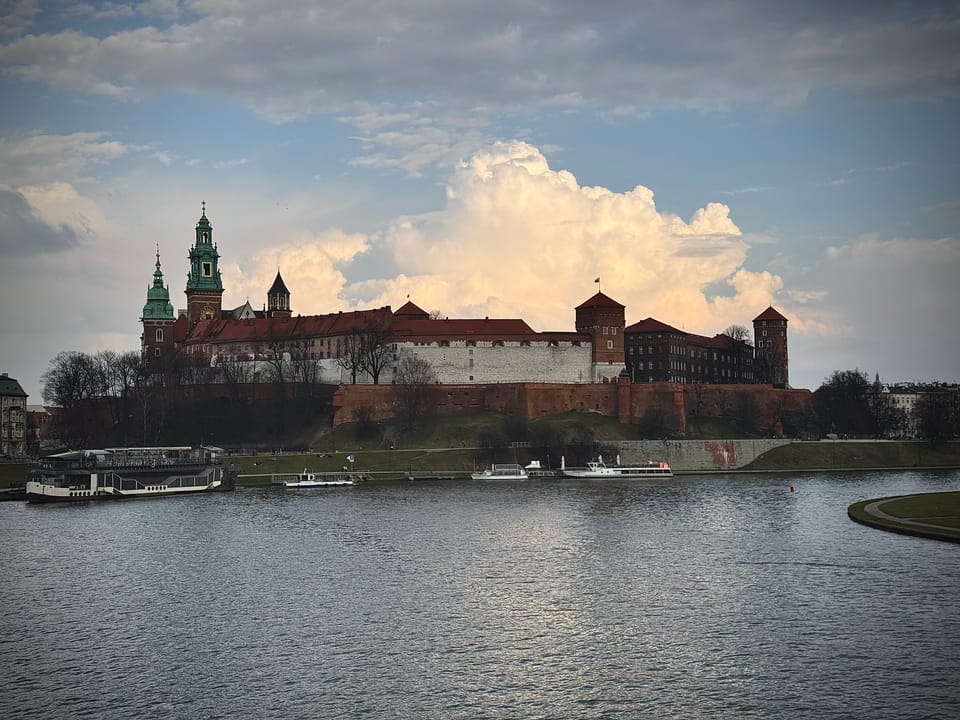
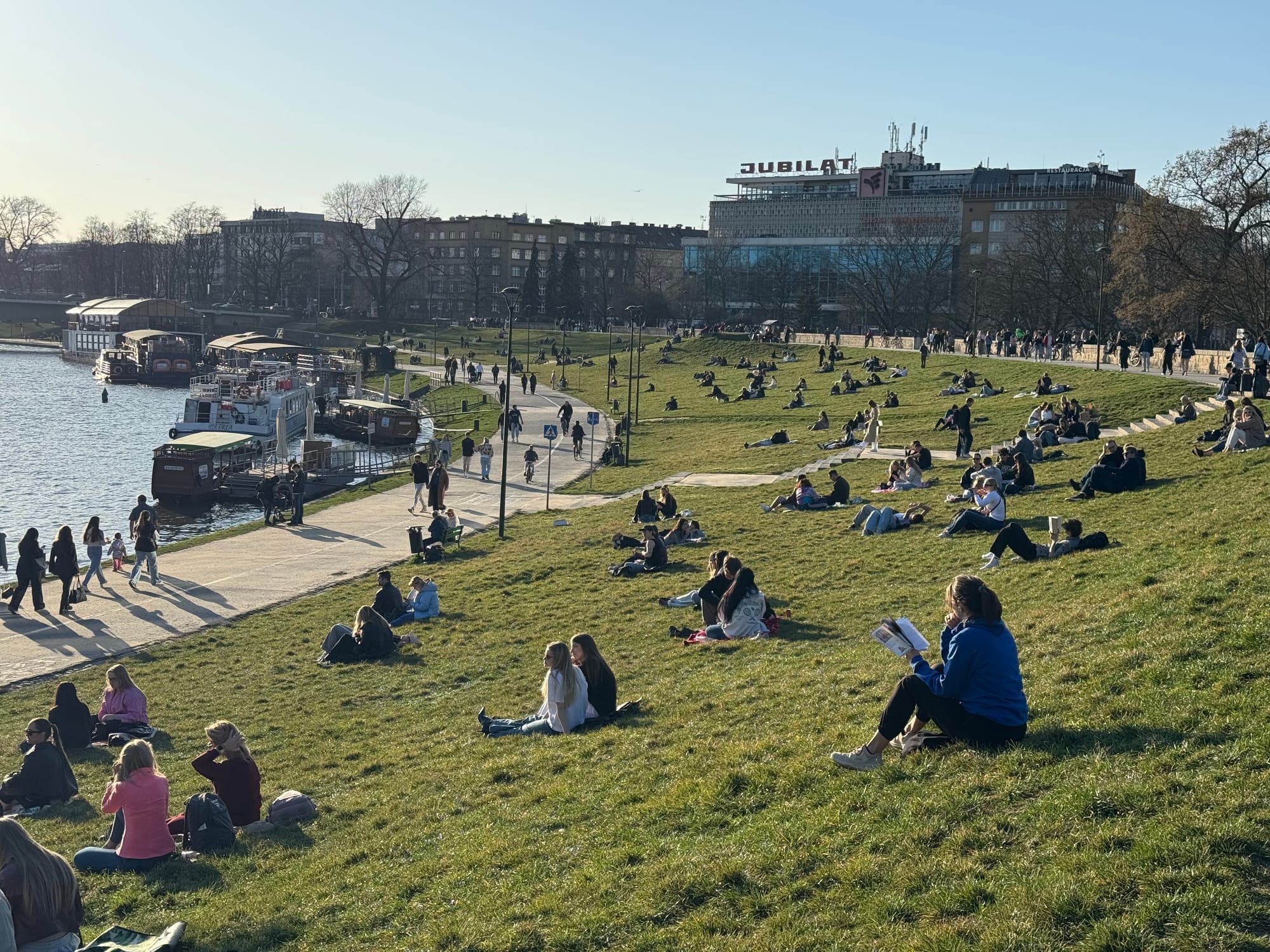
It was my first time in Poland and Krakow delivered – beautiful city, full of history and nice people. Most of them spoke English (even the aunties at the bakeries), everyone was friendly and the whole city had this cool vibe without feeling too hipsterish. I didn't have time to go on a lot of sightseeing, but I can definitely recommend strolling through the old city, visiting Kazimierz and taking a nap at the bank of Vistula river.
Day 1: KRUG meetup
On Thursday Zendesk hosted KRUG, the Krakow Ruby User Group it was a long meetup with several speakers and a lot of insights:
- Andrzej Krzywda from Arkency shared their learnings from using Domain-Driven Design. It confirmed one of my suspicions, that the limitations and language DDD imposes works well with AI-assisted development, grounding the LLMs and managing the precious context window.
- The next two talks were more hardcore – Maciej Mensfeld talked about low level performance optimizations and Paweł Dąbrowski presented about Docker and deployments. Great insights and a bunch of ideas that I took home to try on Raketa's platforms.
The meetup was great and even on the longer side (with three presentations) it felt perfect as an intro for the next few days of Ruby.

A minute of appreciation of the Zendesk, in their Krakow office they have amazing facilities for presentations and super friendly staff who welcomed us and guided us through the strict office entry policies.
Of course we continued the networking into a nearby disco where we talked and laughed until it closed.
Day 2: Workshops and Presentations
We started the second day with practical workshops. Me and Genadi joined the one about building interactive kanban board with Hotwire. Exploring Hotwire was fun – I don't get to write much code nowadays, so it was informative to try it out and look into the tech with my manager's eyes. Definitely a practical way of bringing better UX to microinteractions around your web app without the bloat of modern transpiled JS.
Michał Łęcicki and Piotr Witek did a great job guiding us and I really enjoyed the pacing of the workshop – few slides with examples were followed by 5-10 mins of development. This rhythm was good for learning and I'm going to try this approach for one of my next workshops here in Valencia.
After a long lunch we went for the talks. The venue was the Manggha Museum of Japanese Art and Technology a unique building with superb small hall for presentations. We started by stamping our Ruby Passports and taking coffee and sweets.
A cool surprise followed – Adrian Marin from Friendly.rb a.k.a. The Friendliest Rubyist in the World was MC-ing the event. What an amazing human being he is, as always humble, introspective and funny. He did a great job introducing the speakers and entertaining and inspiring the audience. As Friendly.rb is taking a break this year, I was happy to meet him at RuCoCo and look forward to meeting him on one of the next Ruby events throughout the year.

Obie Fernandez kicked off the presentations with an inspirational talk about using AI not only for development, but to build a company and work environment of a new kind. He jokingly referred himself as someone from the year 2028 sharing their experience, and it looked like this. I totally agree with him that we need new ways of collaborating and working now that our old ways are quickly becoming obsolete.
Bonus points: Coincidentaly, our own internal WMS at Raketa is also called Nexus.
Then Marco Roth presented his progress on the Herb ecosystem and ReActionView. One of the first things that attracted me to the Ruby community was the focus on DX and craftsmanship. Marco did not disappoint here: parser, linter, formatter, LSP-ready and integrated with all code editors. This understanding of ERB templates inspired him to create a modern drop-in replacement for Rails' ActionView. We are currently adopting the tooling in our codebases and definitely going to try ReActionView in our next project.
I was so stoked by the completeness of all these tools, that I forgot to take a photo… There were a couple of attendees who pulled out their laptops and started installing Herb during the talk which is the best testament to the quality of these projects.

The last full lecture was from Carmine Paolino, creator of RubyLLM. He did a nice comparison of how to get started with AI in the most popular libraries for TypeScript, Python and Ruby. Of course the Ruby version was super concise and easy to get started. An API key, a couple of lines of code and you are in – chatbot, CLI tool or an automated AI agent, RubyLLM has everything readily available. Carmine showcased the features of the latest version and since we already use it for several internal projects inside Raketa I was very happy to see the library moving forward fast and strong. Go read his full write up of the talk and pay attention to the code snippets.
There was a recent study about token efficiency and turns out Ruby, with its expressiveness is among the most token efficient languages.
Project like RubyLLM are also a great opportunity to get more people onboard with Ruby, just like we all came to the Rails world thanks to the ease of database modelling with ActiveRecord.
The conference part of the event closed with three lightning talks, all surprising in their own ways:
- Chris Hasiński showed his port of DOOM in Ruby and how we can use play to learn about performance optimisations.
- Nick Sutterer had a funny talk about how he copes with the anxiety of being replaced by the machines. No worries Nick, no machine can replace your attitude, dude.
- Paweł Strzałkowski closed with another game talk, this time using a roguelike to explore MCP servers.
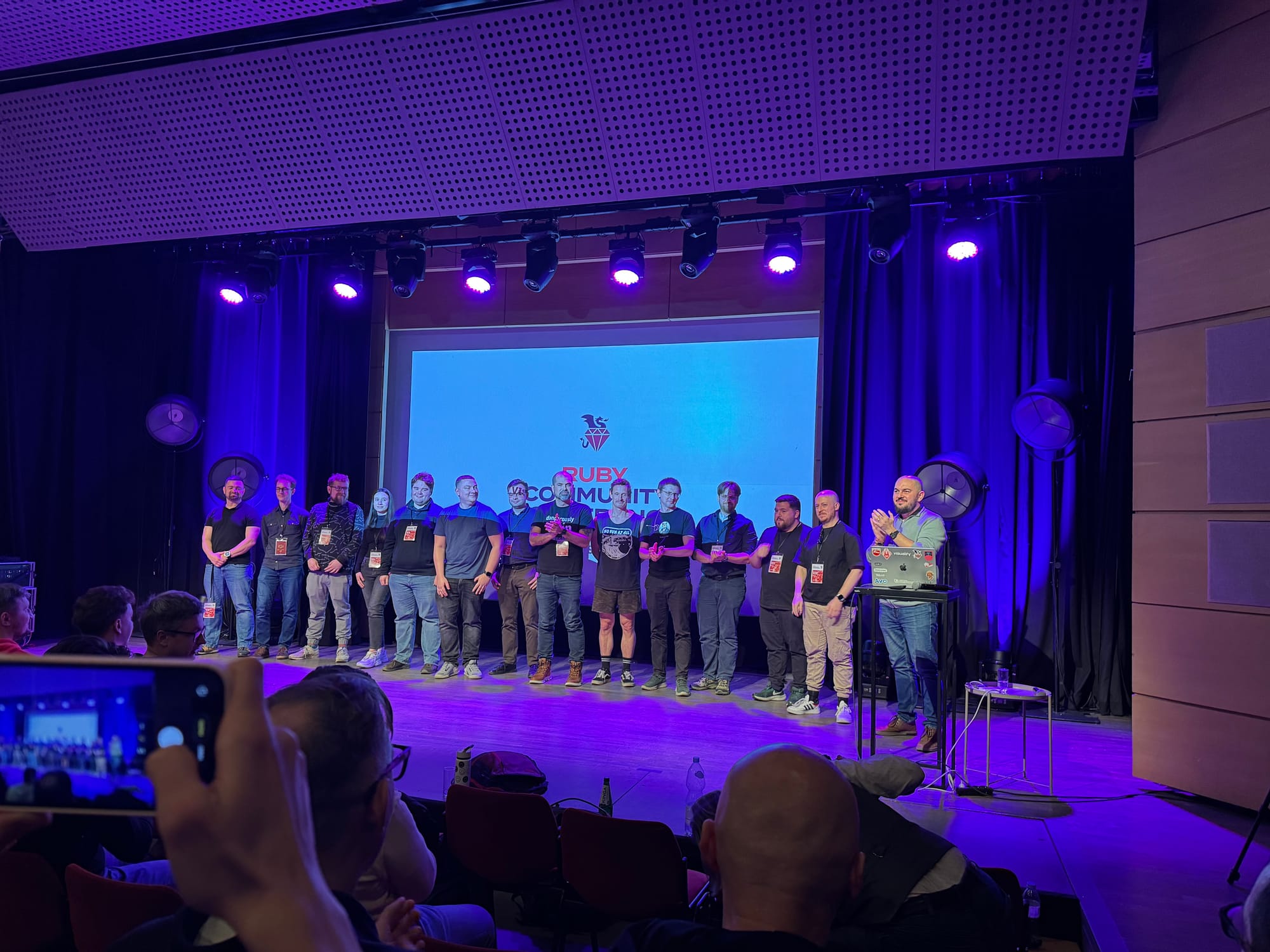
And with that the official program was over. We moved upstairs in the Museum and had a bunch of beers while socializing. Another Ruby conference in the books, as I said in my small spot on the Friendly.rb recap video there's a special charm in these small events that we organize around Europe. If you stop the world for a minute you can touch the energy in the air at these gatherings – not only in the spirit of open source and smart engineering but also in the artistry and diversity that come to meet. From Alex who started an art project to commemorate the legacy of _why the lucky stiff, to the final dinner, where all of us who play music discussed gear and new ways to make noise with plastic and metal.
Huge “Thank you!” to Visuality and Mariusz Koziel who have been doing so much for the Ruby community in the past couple of years. Organizing an event like this takes a lot of energy and dedication and it surely raised the bar for the rest of us. Keep the good work and see you on the next one!